Marathon Race Day Preparation Guide
By Haleigh Hockenberry ·
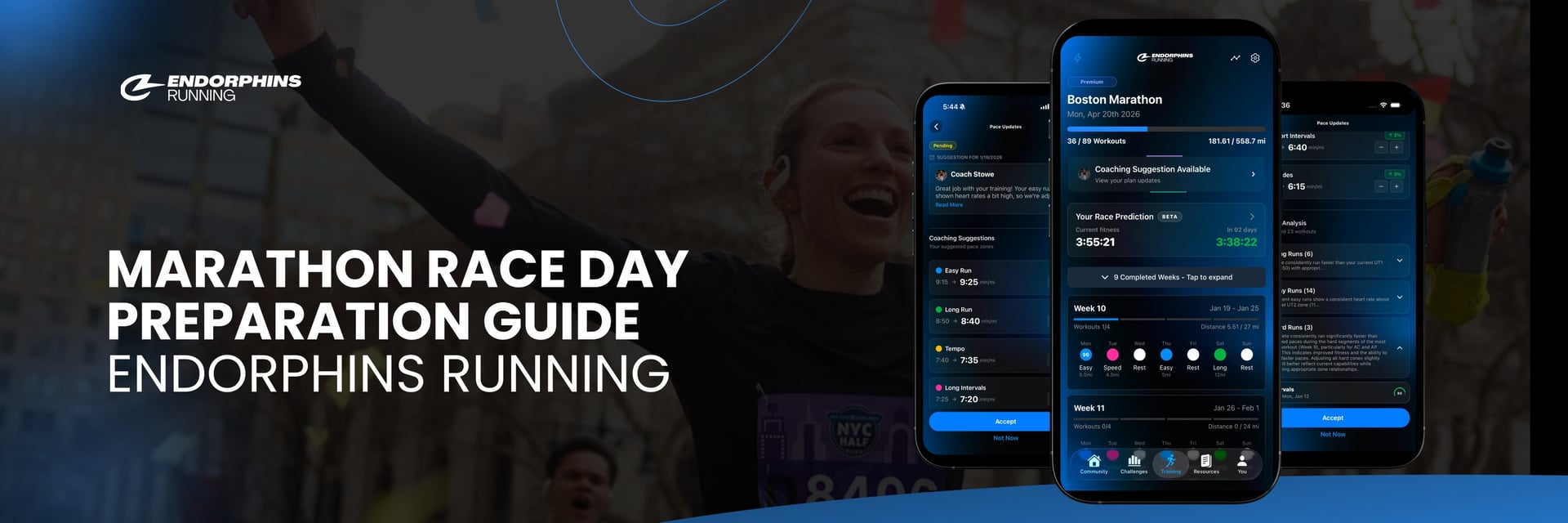
After months of training, race day is finally here. While completing long runs, tempo workouts, and easy runs builds the fitness needed for a marathon, proper race day preparation helps ensure you can fully capitalize on that training. From nutrition and pacing to gear and logistics, having a solid marathon race day plan can make the difference between a successful race and a frustrating experience.
This marathon race day preparation guide covers everything you need to do before, during, and after the race to maximize your performance.
Prepare During Race Week
Marathon success starts long before race morning. The final week before the race should focus on recovery, hydration, and reducing fatigue.
Avoid trying to gain fitness during race week. Instead, trust the training you've already completed and focus on arriving at the starting line healthy and rested.
Most marathon training plans include a taper period during the final two to three weeks before the race. The goal is to reduce training volume while maintaining fitness and allowing your body to recover.
Focus on Nutrition and Hydration
One of the biggest marathon mistakes is neglecting nutrition during race week. Proper fueling ensures your glycogen stores are fully stocked and ready to support 26.2 miles of running.
During the final few days before the marathon:
- Increase carbohydrate intake gradually
- Drink fluids consistently throughout the day
- Avoid unfamiliar foods
- Limit excessive alcohol consumption
- Prioritize balanced meals
Many runners also practice carbohydrate loading before race day.
Have a Race Day Fueling Plan
Don't wait until race morning to decide how you'll fuel during the race. Your fueling strategy should be tested during training and long runs.
Most marathon runners benefit from consuming carbohydrates regularly throughout the race using:
- Energy gels
- Sports drinks
- Chews
- Other easily digestible fuel sources
Your long runs should have prepared you for this process. Learn more in our Marathon Fueling Guide and Long Run Guide.
Know Your Race Pace
One of the most common marathon mistakes is starting too fast. Adrenaline, crowds, and excitement can make the early miles feel easier than they actually are.
Before race day, establish a realistic pacing strategy based on your training and fitness level. Many successful marathon runners aim for even pacing or a slight negative split rather than an aggressive start.
If you're unsure how to determine your target pace, read our guide on How to Find Your Race Paces.
Prepare Your Gear in Advance
The day before the race, lay out everything you'll need:
- Race bib
- Running shoes
- Socks
- Clothing
- Fuel and hydration products
- Watch or GPS device
Race day is never the time to test new gear. Stick with the shoes, clothing, and fueling products you've already used successfully during training.
Protect Your Recovery
Race preparation also means staying healthy in the days leading up to the event. Avoid unnecessary risks, excessive walking, hard workouts, and activities that could lead to injury.
Our Injury Prevention for Marathon Runners guide provides strategies for staying healthy throughout training and race week.
Trust Your Training
By race day, the hard work is complete. The goal is no longer to build fitness but to execute your plan with confidence. Endorphins Running's guide to marathon tapering explains that reducing training volume in the final days before race day allows the body to fully recover, replenish energy stores, and arrive at the start line feeling fresh and ready to perform.
Follow your pacing strategy, stick to your fueling plan, stay patient during the early miles, and trust the preparation you've completed through long runs, workouts, recovery, and nutrition. Endorphins Running guide to marathon fueling emphasizes that practicing your nutrition strategy during training helps prevent energy crashes and ensures your body can efficiently absorb fuel on race day.
A successful marathon begins long before the starting gun. With proper race day preparation, you'll give yourself the best opportunity to perform at your highest level and enjoy the marathon experience from start to finish.