How to Find Your Race Paces
By Haleigh Hockenberry ·
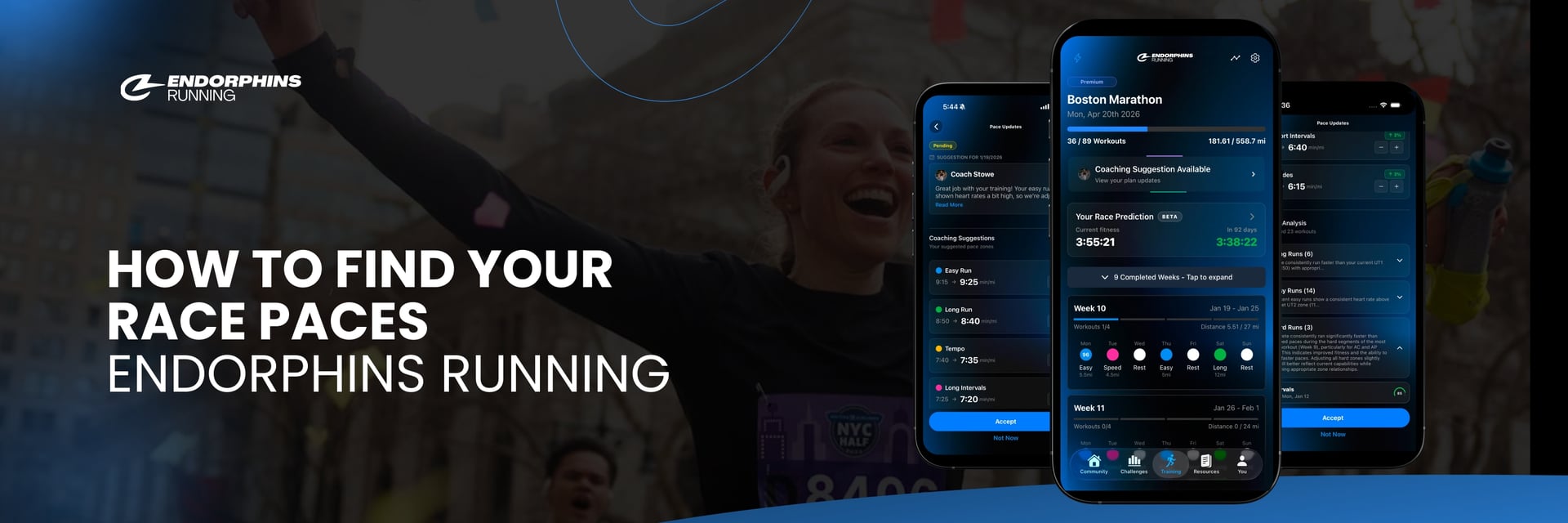
One of the most important skills for runners is learning how to find the right race pace. Whether you're training for a mile race, 5K, 10K, half marathon, or full marathon, understanding pace helps you train effectively, race smarter, and maximize performance.
Many runners make the mistake of running every workout at the same intensity or choosing race goals that don't match their current fitness. By learning how different race paces should feel and how they relate to effort, you can create a more effective training plan and avoid common pacing mistakes.
Why Race Pace Matters
Race pace serves as a benchmark for training. It helps determine the intensity of workouts, long runs, tempo runs, and recovery sessions.
Knowing your current race paces allows you to:
- Set realistic race goals
- Train at the appropriate intensity
- Avoid overtraining
- Improve endurance and speed
- Reduce injury risk
Rather than focusing solely on pace numbers, runners should also learn to train by effort. Factors such as weather, terrain, fatigue, and elevation can influence pace on any given day.
Understanding Effort Levels by Race Distance
Each race distance requires a different balance of speed and endurance.
Mile Pace
The mile is a high-intensity event that relies heavily on speed and aerobic power. Mile pace should feel very hard and sustainable for only a few minutes.
Training for mile performance often includes intervals and VO2 max workouts. Learn more in our VO2 Max Training Guide.
5K Pace
A 5K is run near your maximum sustainable effort. Most runners can maintain 5K pace for 15–35 minutes depending on experience and fitness level.
Workouts at 5K pace improve aerobic capacity and speed endurance.
10K Pace
10K pace is slightly slower than 5K pace but still requires a strong aerobic effort. It should feel challenging yet controlled.
This pace often serves as a bridge between speed-focused training and longer endurance events.
Half Marathon Pace
Half marathon pace is comfortably hard. You should be working consistently but not racing all-out during the early miles.
Tempo runs are one of the most effective ways to improve half marathon performance because they raise your lactate threshold and teach you to sustain faster paces. For more details, visit our Tempo Run Guide.
Marathon Pace
Marathon pace should feel controlled and sustainable. Unlike shorter races, marathon success depends heavily on endurance, fueling, and pacing discipline.
Long runs and marathon-specific workouts are essential for developing the ability to maintain marathon pace for 26.2 miles. Our Long Run Guide and Marathon Nutrition Guide provide detailed strategies for marathon preparation.
Using Recent Race Results
One of the best ways to determine training and race paces is by using a recent race result. A recent 5K or 10K can provide an accurate estimate of your current fitness level and help predict performances at longer distances.
As fitness improves, your race paces should be updated to reflect your current capabilities.
Supporting Your Training
Finding your race paces is only one piece of the puzzle. Easy runs provide aerobic development and recovery between harder sessions, while strength work improves running economy and durability. According to Endorphins Running's guide to VO2 max training, incorporating structured high-intensity sessions alongside easy mileage helps improve aerobic capacity and overall running efficiency when balanced correctly within a training plan.
Be sure to include Easy Runs, Strength Training for Runners, Injury Prevention strategies, and a proper Marathon Taper in your overall training plan. Endorphins Running's guide to tempo runs explains that threshold-style workouts are especially effective for improving endurance and race-specific fitness, bridging the gap between easy running and high-intensity training.
Train by Effort and Pace
The most successful runners combine pace targets with perceived effort. Pace provides structure, while effort ensures you're responding appropriately to daily conditions.
By understanding the demands of each race distance and training at the correct intensity, you'll be better prepared to reach your goals in the mile, 5K, 10K, half marathon, and marathon.