Why Your Race Pace Doesn't Match Your Training Pace (And How to Fix It)
By Haleigh Hockenberry ·
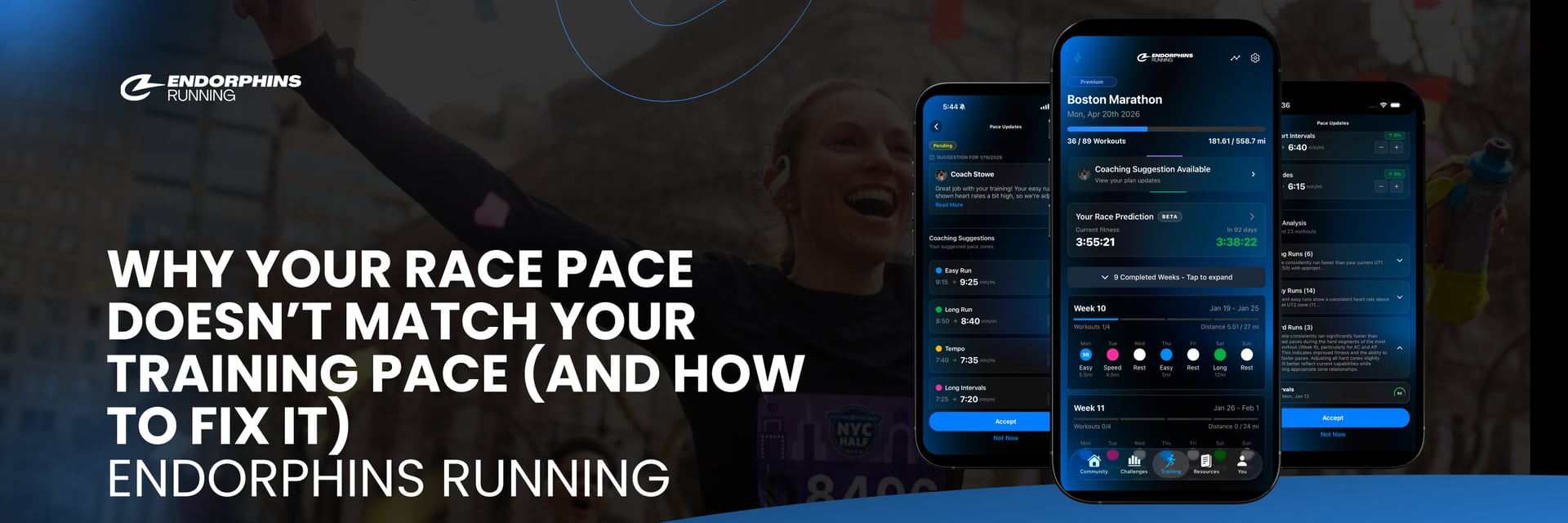
If you've ever wondered why your race pace doesn't match your training pace, you're not alone. Many runners feel discouraged when their everyday runs seem much slower than the pace they can hold on race day. The truth is, this difference is completely normal, and it's actually a sign that you're training effectively.
Understanding the purpose behind different running paces can help you become a faster, healthier, and more consistent runner.
Easy Runs Should Feel Easy
One of the biggest misconceptions among runners is that every run should be fast. In reality, easy runs make up the majority of a successful training plan. These runs are designed to build your aerobic fitness, improve endurance, and allow your body to recover from harder workouts.
If you're constantly trying to match your race pace during training, you increase your risk of fatigue, injury, and burnout. Running slower on easy days gives your muscles time to repair while strengthening your cardiovascular system.
A good rule of thumb is that you should be able to hold a conversation during an easy run. If you're gasping for air, you're likely running too fast.
Race Day Brings Different Conditions
Your race pace is often faster because race day creates an environment that's difficult to replicate in training.
Factors like adrenaline, competition, crowd support, proper tapering, and fresh legs all contribute to improved performance. During training, you're often carrying fatigue from previous workouts, making your pace naturally slower.
Instead of comparing every run to race day, focus on completing each workout at the effort it's designed for.
Train in Different Pace Zones
Effective training includes a variety of paces, each with a different purpose.
Easy runs build endurance, tempo runs improve your ability to sustain faster efforts, interval workouts increase speed and power, while long runs prepare your body for longer distances.
Trying to run every workout at the same pace limits your progress because your body never receives the right stimulus for improvement.
Learning to trust these pace zones is one of the biggest breakthroughs many runners experience.
Stop Chasing Pace—Start Chasing Progress
Weather, hills, sleep quality, stress, and recovery all affect your running pace. A slower run doesn't necessarily mean you're losing fitness.
Instead of judging success by one workout, look for long-term trends. Are you recovering faster? Does your easy pace feel more comfortable? Are interval workouts becoming easier? These are all signs your training is working.
Train Smarter with Endorphins Running
One of the biggest challenges runners face is knowing how fast they should run each day. That's where Endorphins Running makes a difference.
Instead of relying on generic training plans, Endorphins Running creates personalized workouts based on your fitness level and running goals. The app automatically recommends the right pace for easy runs, speed sessions, recovery days, and race preparation so you're training at the right intensity—not just running hard every day.
Whether you're chasing a faster 5K or preparing for your next half marathon, following the right pace on the right day can help you improve more efficiently while reducing your risk of injury.
If you'd like to learn more about why most runs should be easy, check out this article from the American Council on Exercise. For a deeper look at heart rate and training intensity, this guide from the American Heart Association explains how different effort levels affect performance. You can also explore this Runner's World article on training pace zones to better understand how easy runs, tempo runs, and intervals work together to improve race-day results.