How to Train for Your First Sub-30 Minute 5K
By Haleigh Hockenberry ·
Running your first sub-30 minute 5K is one of the most rewarding milestones for beginner and intermediate runners. Breaking the 30-minute barrier means averaging approximately 9:39 per mile (6:00/km) for 3.1 miles—a challenging but achievable goal with the right training plan.
The biggest mistake runners make is assuming they need to run hard every day. In reality, improving your 5K time comes from a combination of consistent mileage, targeted speed workouts, and adequate recovery. A structured training plan will help you build endurance while increasing your speed without leading to burnout or injury.
Focus on Consistency First
Before adding intense workouts, establish a routine of running three to four days each week. Consistency builds your aerobic base, which is the foundation for every faster race. Even easy runs improve cardiovascular fitness and help your body become more efficient at using oxygen.
Many runners trying to break 30 minutes make the mistake of skipping easy runs in favor of speed sessions. However, slower runs allow your muscles and connective tissues to recover while still building endurance.
Add One Speed Workout Each Week
To run faster, you need to practice running faster. One weekly interval workout is enough for most runners targeting a sub-30 5K.
A sample workout might include:
- 6 x 400-meter repeats at a pace faster than your goal race pace
- 90 seconds of easy jogging between intervals
- A 10-minute warm-up and cool-down
These workouts improve your running economy and help your body become more comfortable sustaining faster paces.
Don't Skip Tempo Runs
Tempo runs bridge the gap between easy jogging and race pace. Running at a "comfortably hard" effort teaches your body to maintain speed over longer distances.
A simple tempo workout includes:
- 10-minute warm-up
- 20 minutes at a steady, challenging pace
- 10-minute cool-down
This type of training helps improve endurance while increasing your confidence before race day.
Recovery Is Part of Training
Many runners plateau because they underestimate the importance of recovery. Rest days, sleep, hydration, and strength training all contribute to better performance. Strong glutes, hips, and core muscles improve running form while reducing injury risk.
Listening to your body is equally important. If fatigue begins to accumulate, reducing training intensity for a few days often leads to better long-term progress than pushing through exhaustion.
Train Smarter with Endorphins Running
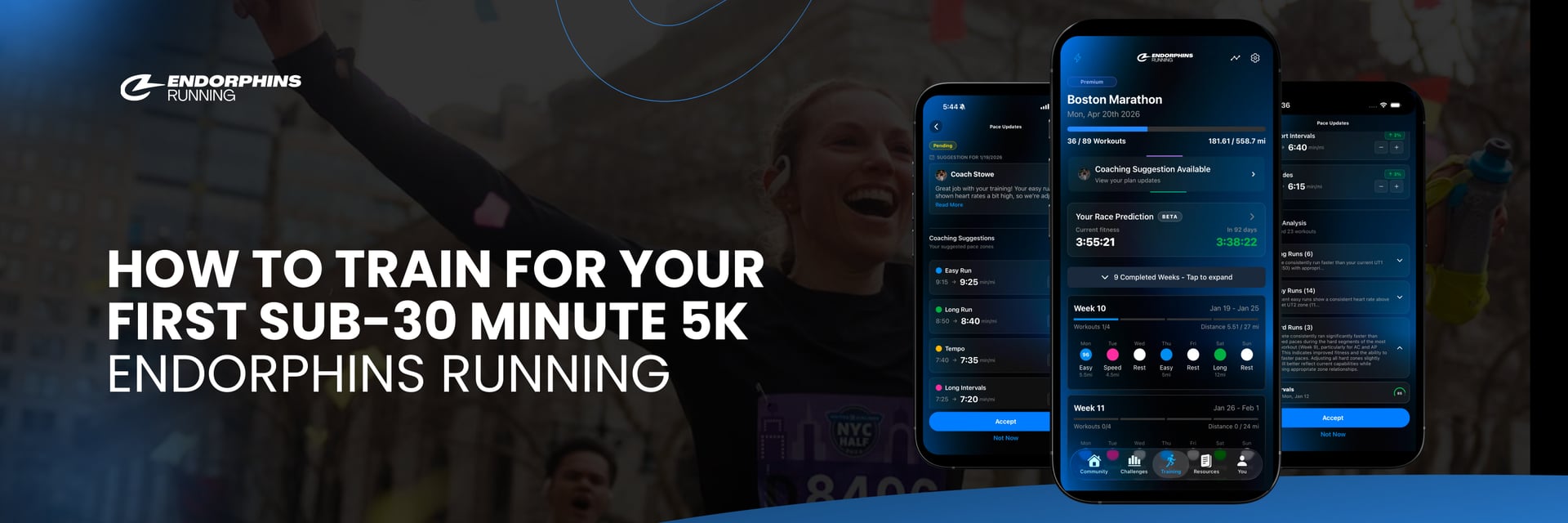
Generic training plans assume every runner progresses at the same pace, but that's rarely true. The Endorphins Running app creates personalized training plans based on your fitness level, race goals, and workout history. Instead of following a rigid schedule, your plan adapts as you improve, helping you balance speed workouts, easy runs, and recovery to maximize progress.
Whether your goal is your first sub-30 minute 5K or your next personal record, Endorphins Running provides the guidance needed to train with confidence and consistency.
Want to dive deeper into the science behind improving your running performance? Check out this Mayo Clinic guide to 5K training for beginner-friendly training principles. If you're interested in how interval training improves 5K performance, this research summary from Runner's World explains the benefits of structured speed workouts. For additional guidance on building healthy exercise habits, this CDC article on physical activity for adults offers evidence-based recommendations that support long-term fitness.