How to Run Longer Without Feeling Exhausted
By Haleigh Hockenberry ·
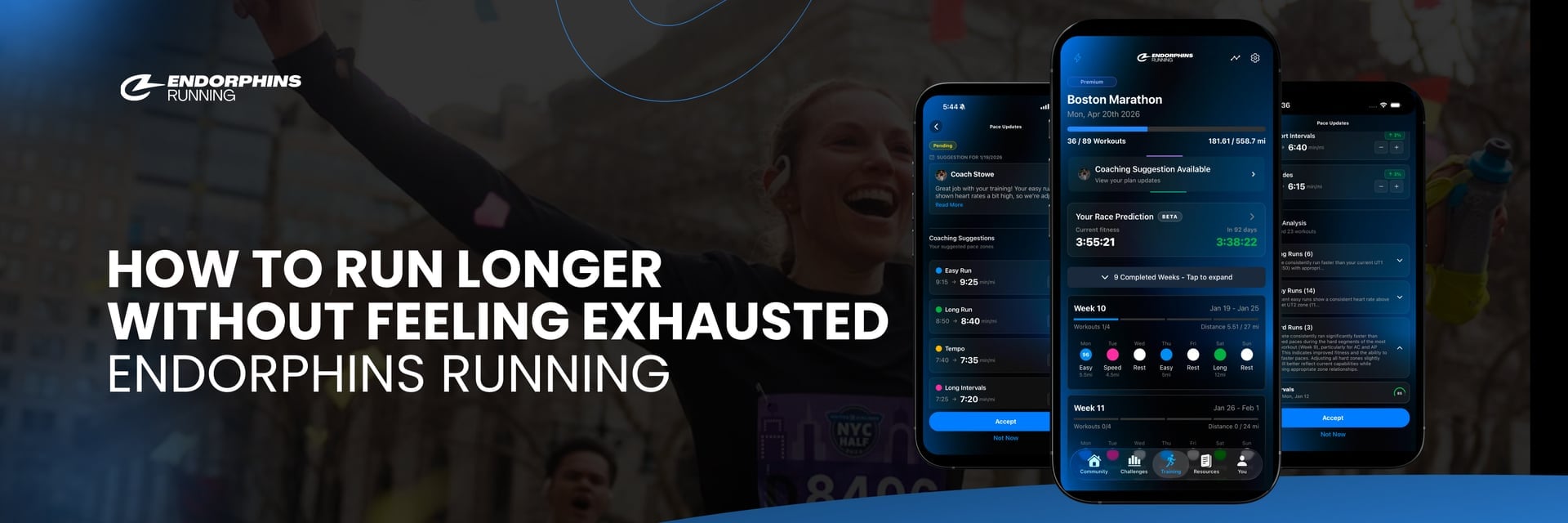
One of the most common questions new runners ask is: "How can I run longer without getting so tired?"
If you've ever started a run feeling great only to find yourself gasping for air a few minutes later, you're not alone. The good news is that endurance isn't something you're born with, it's something you build through smart, consistent training.
The key to running longer isn't pushing harder every time you run. In fact, many runners improve their endurance faster when they slow down and focus on building a strong aerobic foundation.
Slow Down More Than You Think
One of the biggest mistakes beginner runners make is running every workout too fast.
When you run at a hard effort, your body relies more heavily on anaerobic energy systems, which fatigue quickly. Easy running, on the other hand, trains your aerobic system, the engine responsible for endurance.
If you're struggling to run longer, try running at a pace where you can comfortably hold a conversation.
Focus on Consistency First
Many runners assume they need longer workouts to improve endurance.
The reality is that consistency matters more.
Running three or four times per week for several months will produce better results than one or two long, exhausting runs each week.
Your body adapts gradually to training stress. Every run builds upon the previous one, helping strengthen your heart, lungs, muscles, and connective tissues.
The goal isn't to have one amazing workout. The goal is to string together weeks and months of consistent training.
Increase Distance Gradually
If you're currently running 2 miles comfortably, don't jump straight to 5 miles.
A better strategy is to add a small amount of distance each week.
Many coaches recommend increasing your longest run by roughly 5–10% per week, depending on your experience and recovery.
Small improvements may not feel exciting in the moment, but they compound quickly over time.
Build a Weekly Long Run
One of the best ways to improve endurance is by introducing a weekly long run.
Your long run doesn't need to be fast.
Its purpose is to teach your body how to stay comfortable on your feet for longer periods while developing aerobic fitness.
For beginner runners, a long run might simply be 10–20 minutes longer than your normal runs.
Over time, these longer efforts can dramatically improve endurance and confidence.
Don't Ignore Recovery
Many runners focus entirely on training and forget that fitness gains actually occur during recovery.
Sleep, hydration, nutrition, and rest days all play a major role in endurance development.
If you're constantly exhausted during runs, it may be a sign that your body needs more recovery rather than more training.
Follow a Structured Training Plan
Perhaps the fastest way to improve endurance is by following a proven training plan.
A good plan balances easy runs, long runs, recovery days, and gradual progression. It removes the guesswork and ensures you're building fitness safely.
Many runners plateau because they either do too much too soon or never challenge themselves enough.
A structured plan helps you find the right balance.
The Bottom Line
If you want to run longer without feeling exhausted, focus on three simple principles:
- Run slower than you think you need to.
- Train consistently each week.
- Increase distance gradually over time.
Endurance isn't built in a single workout. It's built through hundreds of small training decisions that add up over weeks and months. Runner's World's guide to progressing your running safely explains that increasing your training gradually allows your body to adapt while reducing the risk of injury and burnout.
At Endorphins Running, our beginner-friendly running plans are designed to help you build endurance safely, avoid burnout, and reach your goals with confidence. Whether you're training for your first 5K or looking to run farther than ever before, the right plan can help you get there faster and enjoy the process along the way. Runner's World's beginner base-building guide reinforces that consistent, easy running over time creates the aerobic foundation needed for long-term endurance and continued improvement.