How to Prepare for Your First Destination Race
By Haleigh Hockenberry ·
Running a destination race is about more than crossing the finish line, it's an opportunity to combine travel with one of your favorite hobbies. Whether you're heading to a scenic coastal half marathon, a major city marathon, or a bucket-list trail race, preparing for a race away from home requires more planning than your typical weekend event. Here's how to set yourself up for a successful first destination race.
Book Your Travel Early
Popular races often attract thousands of participants, meaning flights and hotels can fill up quickly. Once you've secured your race registration, book your accommodations as early as possible.
Look for a hotel within walking distance of the start or finish line to reduce race morning stress. If that's not possible, research transportation options ahead of time so you're not scrambling to find parking or rides on race day.
Arrive Before Race Day
If your schedule allows, plan to arrive at least two days before the race. Traveling can leave you feeling stiff, dehydrated, and fatigued, especially after long flights or road trips.
Arriving early gives you time to adjust, visit the race expo, pick up your bib, and familiarize yourself with the course area. It also allows your body to recover from travel so you can perform at your best.
Stick to Your Training Plan
It's tempting to squeeze in extra sightseeing miles before the race, but this isn't the time to increase your training load. Continue following your taper plan and avoid exhausting activities that could leave your legs feeling heavy.
A short shakeout run the day before the race can help loosen your muscles without adding unnecessary fatigue.
Pack Like a Runner
Never assume you'll be able to buy everything you need once you arrive. Create a packing checklist that includes:
- Running shoes you've already trained in
- Race outfit
- Socks
- GPS watch and charger
- Nutrition and hydration products
- Safety pins or race belt
- Sunglasses, hat, and sunscreen if needed
Avoid racing in brand-new shoes or apparel. Race day is about consistency, not experimentation.
Prepare for Different Weather Conditions
One of the biggest challenges of destination races is adapting to a new climate. A race in a humid coastal city will feel much different than one in a cool mountain town.
Check the forecast several days before your trip and pack clothing options for different temperatures. If you'll be racing in significantly warmer conditions than you've trained in, slow your planned pace slightly and prioritize hydration.
Have a Race Morning Plan
The last thing you want is unnecessary stress before the starting gun.
Know where the start line is, when your corral opens, where gear check is located, and how long it will take to get there. Lay out your race gear the night before and eat a familiar pre-race breakfast that you've tested during training.
Having a clear plan allows you to stay relaxed and focus on your race instead of logistics.
Let Endorphins Running Guide Your Training
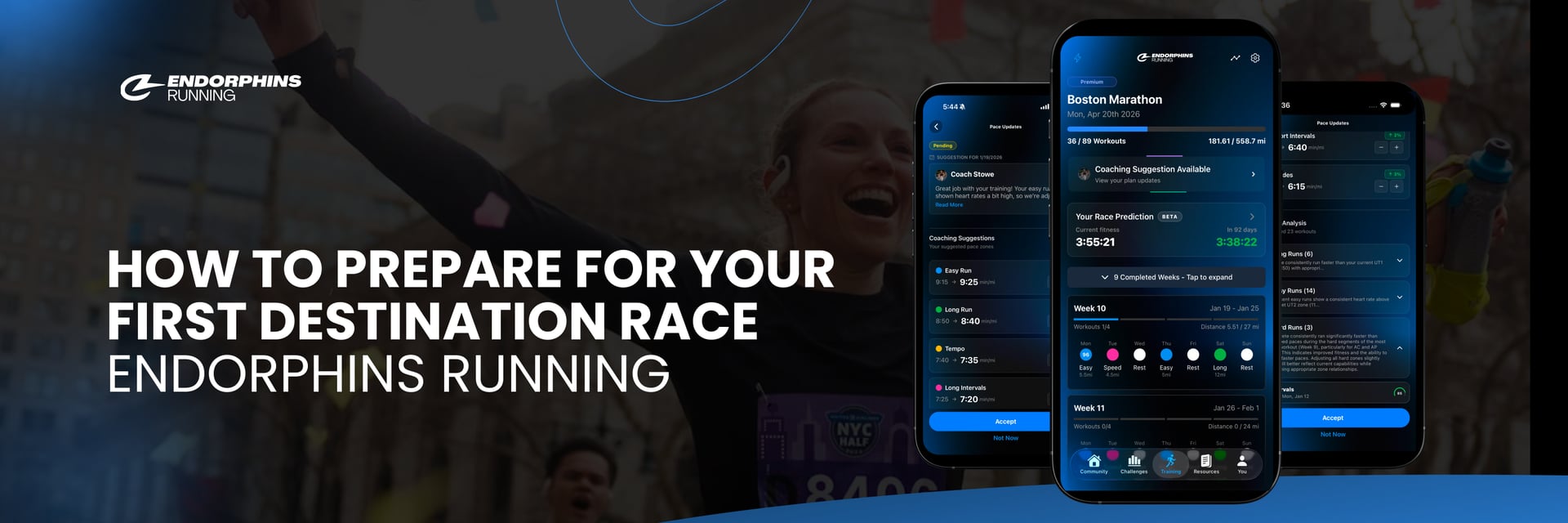
Training for a destination race often means balancing workouts with travel plans, work commitments, and unpredictable schedules. That's where Endorphins Running can help.
Instead of following a one-size-fits-all training schedule, Endorphins Running creates personalized plans that adapt to your fitness level, race goals, and progress. Whether you're preparing for your first destination half marathon or traveling across the country for a marathon PR, the app helps you stay on track with customized workouts, pace guidance, and recovery recommendations.
With the right preparation, your first destination race can be more than just a memorable trip, it can be your strongest performance yet.
If you'd like more advice on traveling for races, check out this Runner's World guide to race travel for practical planning tips. For recommendations on staying healthy while traveling, the CDC's travel health guidance covers topics like hydration, illness prevention, and preparation. If you're racing in warm conditions, the American College of Sports Medicine's heat and exercise resources explain how to adjust your training and race-day strategy safely.